

Год: 2014
Разделы: Научные публикации, Доклады, Обзорная статья
Темы: Водная дипломатия, Вода, Водное законодательство, Стратегическое управление водными ресурсами
Авторы: Benjamin Pohl, et al.
Страны:
Источник: Adelphi
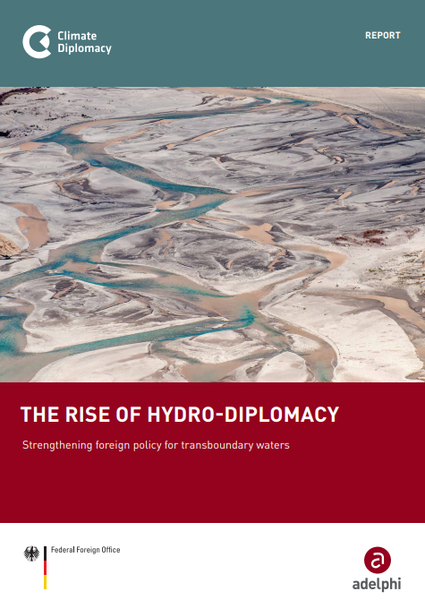
Water is a fundamental precondition for human life. No substitute for freshwater exists, and it is scarce in many regions. Simultaneously, much of it transcends state borders via shared river and lake basins or groundwater aquifers. The resulting political, economic, social and environmental interdependencies give water resources the crucial potential to either foster cooperation or exacerbate conflict. The significance of access to water is growing as demographic and economic drivers as well as deteriorating water quality interact with climate change that will regionally increase water scarcity and variability.
Файлы для скачивания:
Water is a fundamental precondition for human life. No substitute for freshwater exists, and it is scarce in many regions. Simultaneously, much of it transcends state borders via shared river and lake basins or groundwater aquifers. The resulting political, economic, social and environmental interdependencies give water resources the crucial potential to either foster cooperation or exacerbate conflict. The significance of access to water is growing as demographic and economic drivers as well as deteriorating water quality interact with climate change that will regionally increase water scarcity and variability.
Competition over shared waters should warrant strong interest from foreign policy makers. Foreign policy can help improve transboundary water governance, and transboundary water governance can give foreign policy makers a toehold for making progress on crucial foreign policy interests. Thus, encouraging greater cooperation over transboundary waters offers significant prospects for the resolution of political conflicts and greater regional integration. Transboundary waters constitute a promising entry point for diplomats aiming for high peace dividends.
This paper argues that foreign policy makers can and should do more to realise these dividends. It calls on diplomats to accompany and facilitate the efforts of technical and development experts in transboundary basins. In particular, foreign policy makers must:
Transboundary basin management is frequently eclipsed by intra-basin politics, which in turn is often compounded by power asymmetries. In this context, a focus on technical solutions for shared basins is often not enough; it needs to be complemented by political engagement. Foreign policy makers can provide crucial support in this respect, even if their engagement also entails risks by inserting (perceived) outside agendas.
По всем вопросам сотрудничества обращайтесь по эл.адресу или телефону: