
Year: 2024
Collections: Scientific Publications
Topics: Water, Sustainable Development
Authors: Catalin Stefan, Jana Sallwey, Nurlan Ongdas, Mohammad Al-Hosban
Countries: Kazakhstan
Source: https://water-ca.org
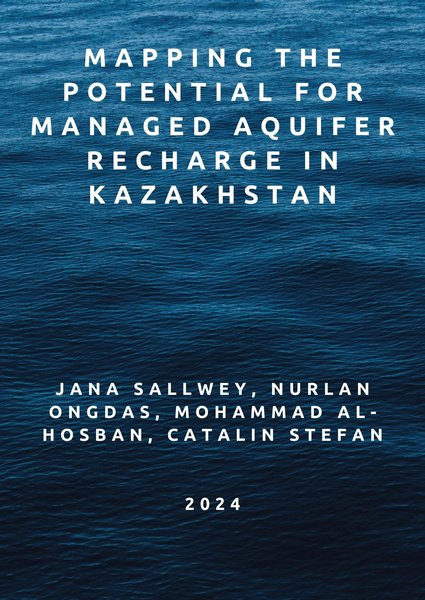
MAR remains relatively underutilized in Central Asia despite its potential to address water scarcity issues, particularly those related to seasonal fluctuations in water availability. Thus, the objective of this study was to produce a map depicting the potential suitability of managed aquifer recharge (MAR) implementation in Kazakhstan. Employing a multi-criteria decision analysis framework, five distinct physical criteria were integrated and visualized within a Geographic Information System (GIS) to delineate the intrinsic potential for MAR. To demonstrate the practical utility of the generated map, it was applied to the Zhambyl region in Southern Kazakhstan, an area previously afflicted by water scarcity challenges. The intrinsic MAR potential map was overlaid with remote sensing data identifying potential water sources and water utilization patterns. This overlay facilitated the identification of priority areas with potential for further evaluation for MAR implementation. The map developed for Kazakhstan represents the first spatial representation of MAR potential within the region, serving to raise awareness regarding the feasibility of MAR application. It is anticipated that dissemination of this map will enhance understanding among water management professionals, potentially catalysing the integration of MAR methodologies into regional water management strategies.
Year: 2025
Collections: Scientific Publications
Topics: Water, Sustainable Development
Authors: Пономарева Т.С., Жирков В.В., Южаков И.Ю.
Countries: Kazakhstan
Source: https://water-ca.org
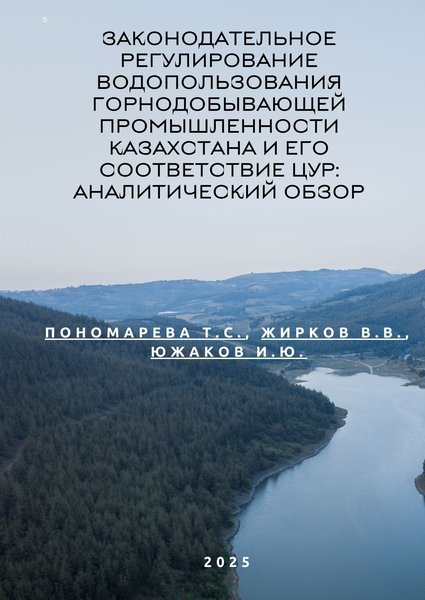
Возрастающая нагрузка на водные ресурсы, а также международные обязательства Казахстана по Повестке дня на период до 2030 г. определили необходимость скорейшей модернизации водохозяйственной инфраструктуры промыш-ленных предприятий. Между тем (в условиях отсутствия объективных гидроэкологических данных и нормативной неопределенности) принятие технологических решений по очистке и использованию шахтных и карьерных вод сопряжено водными рисками для горнодобывающей отрасли производства. Данные факторы послужили поводом для подготовки аналитического обзора с целью более широкого информирования заинтересованных сторон о существующей проблеме. Фундаментальный контекст статьи определяется научно-теоретическим сопоставлением существующей законо-дательной структуры регулирования водопользования с институциональной политикой Целей устойчивого развития № 6 (ЦУР 6) «чистая вода и санитария». В качестве ключевого аспекта исследований выступает «комплексный» индикатор 6.4.2. ЦУР «уровень водного стресса», сквозная взаимосвязь которого с другими индикаторами ЦУР 6 позволяет представить всесторонний анализ в вопросе надлежащего исполнения национальных стратегий РК по устойчивому управлению водными ресурсами. Результаты исследований показали, что несмотря на довольно полную законодательную интеграцию ЦУР в нормативно правовые акты (НПА) Казахстана, их реализация в виде экологических нормативов требуют критической переоценки для возможности практического применения при идентификации горнодобывающими предприятиями наилучших доступных техник (НДТ). Несостоятельность экологических нормативов обусловлена слабым межведомственным взаимодействием, размытом понимании ответственности, формальным характером участия промышленного и научного сообщества в разработке, экспертной оценке и научном сопровождении проектов НПА.
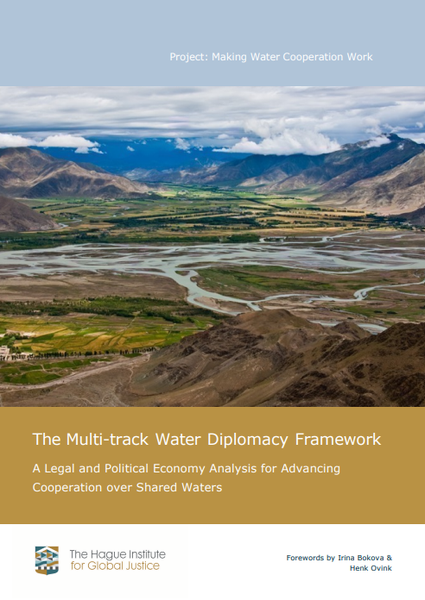
Year: 2016
Collections: Concept paper Scientific Publications, Research Paper, Review article,
Topics: Water, Sustainable Development, IWRM, Water law, Water diplomacy, Water governance
Authors: Patrick Huntjens, Yumiko Yasuda, Ashok Swain, Rens de Man, Bjørn-Oliver Magsig, Shafiqul Islam
Countries: N/A
Source: The Hague Institute for Global Justice
This publication is part of the project Water Diplomacy: Making Water Cooperation Work, led by The Hague Institute for Global Justice, in collaboration with Stockholm International Water Institute (SIWI), UNESCO Category II Centre for International Water Cooperation (ICWC), International Union for Conservation of Nature (IUCN), Uppsala University, University of Otago, University College Cork and Tufts University Water Diplomacy Program.
Year: 2025
Collections: Books
Topics: Water, Climate, Sustainable Development, Management, Water diplomacy, Water governance Gender, IWRM, Agriculture, Irrigation,
Authors: Shafiqul Islam, Kevin Smith, Martina Klimes, Aaron Salzberg
Countries: N/A
Source: Routledge
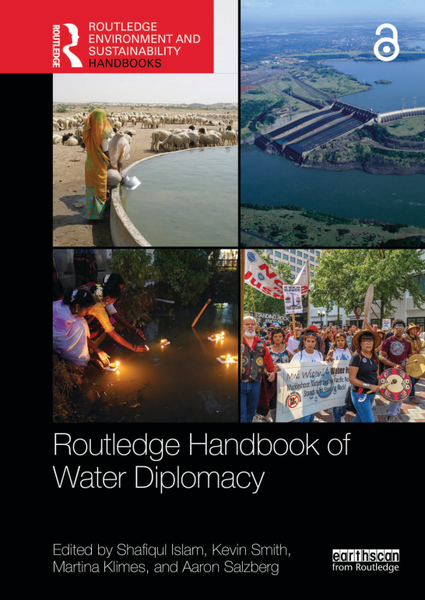
The Routledge Handbook of Water Diplomacy is a comprehensive guide to understanding and practicing water diplomacy – a framework for building relationships, negotiating shared interests, and managing complex water challenges across physical, political, and societal boundaries.
Year: 2020
Collections: Books
Topics: Water, Sustainable Development, Irrigation, IWRM, NEXUS, Water law, Water diplomacy, Water governance, Transboundary Water Resources, Water Security
Authors: Anoulak Kittikhoun, Susanne Schmeier
Countries:
Source: Routledge
River Basin Organizations in Water Diplomacy explores the role of River Basin Organizations (RBOs) in preventing and resolving conflicts related to transboundary water resources. Through a comparative analysis of international river basins, the book examines how institutional mechanisms, legal frameworks, and diplomatic tools promote cooperation among states and support the sustainable management of shared water resources.
For questions about cooperation, please contact us at: