
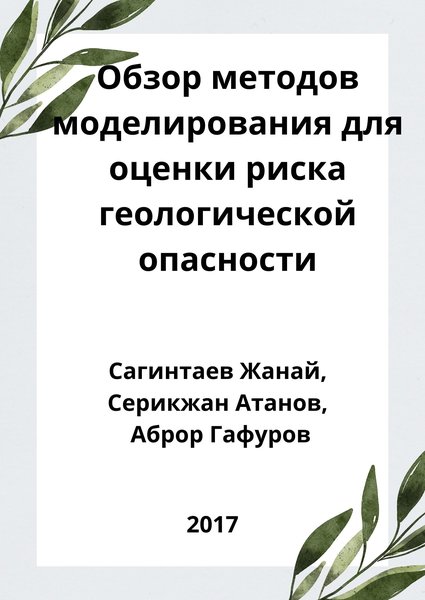
Year: 2017
Collections: Scientific Publications
Topics: Water, Climate
Authors: Гафуров А. А., Сагинтаев Жанай, Атанов Серикжан
Countries: Kazakhstan, Kyrgyzstan, Uzbekistan, Tajikistan, Turkmenistan
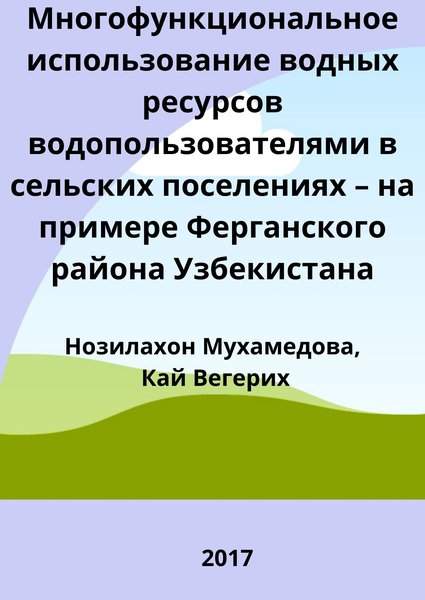
Year: 2017
Collections: Scientific Publications
Topics: Water, Climate
Authors: Вегерих Кай, Мухамедова Нозилахон
Countries: Uzbekistan
Year: 2017
Collections: Scientific Publications
Topics: Water
Authors: Wegerich Kai, Zaryab A., Klove B., Noori Ali Reza
Countries: Afghanistan
Year: 2017
Collections: Scientific Publications
Topics: Water
Authors: Plekhanov P.A.
Countries: Kazakhstan
Year: 2016
Collections: Short Communications
Topics: Energy
Authors: Крутов Д.А.
Countries: Kazakhstan, Kyrgyzstan, Uzbekistan, Tajikistan, Turkmenistan
Year: 2016
Collections: Technical note
Topics: Climate
Authors: Герлитц Ларс, Унгер-Шайесте Кати, Ворогушин Сергей
Countries: Kazakhstan, Kyrgyzstan, Uzbekistan, Tajikistan, Turkmenistan
Year: 2016
Collections: Scientific Publications
Topics: Water, Climate, Sustainable Development
Authors: Kayumov Abdurasul
Countries: Kazakhstan, Kyrgyzstan, Uzbekistan, Tajikistan
Year: 2016
Collections: Short Communications
Topics: Water, Climate, Agriculture, Sustainable Development
Authors: Knauft Falk-Juri
Countries: Kazakhstan, Kyrgyzstan, Uzbekistan, Tajikistan, Turkmenistan
Year: 2016
Collections: Short Communications
Topics: Water, Climate, Agriculture, Sustainable Development, IWRM
Authors: Unger-Shayesteh Katy, Gerlitz Lars, Vorogushyn Sergiy
Countries: Kazakhstan, Kyrgyzstan, Uzbekistan, Tajikistan, Turkmenistan
Source: Central Asian Journal of Water Research
An important topic of the journal “Integrated Water Resources Management in Central Asia” will be the assessment of past and future changes in climate and water resources in Central Asia. This technical note aims at providing guidance for sound data-based assessment of changes to be published in this journal. The main requirements for achieving credible results are (1) the use of consistent data series, (2) the selection of appropriate change detection methods, and (3) the discussion of the results, their uncertainties and limitations. Using an example of trend analysis, it is exemplarily shown how inhomogeneities in a data series, the selection of start and end points, the applied methods, and temporal aggregation may affect the results of change studies.
Year: 2016
Collections: Short Communications
Topics: Water, Climate, Energy, Agriculture
Authors: Крутов Д.А., Кнауфт Фальк-Юрий
Countries: Kazakhstan, Kyrgyzstan, Uzbekistan, Tajikistan, Turkmenistan
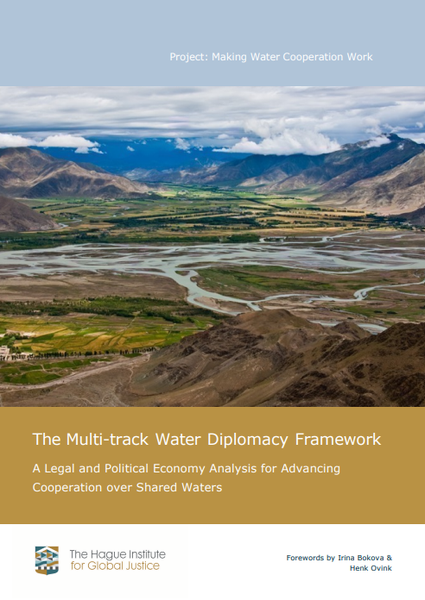
Year: 2016
Collections: Concept paper Scientific Publications, Research Paper, Review article,
Topics: Water, Sustainable Development, IWRM, Water law, Water diplomacy, Water governance
Authors: Patrick Huntjens, Yumiko Yasuda, Ashok Swain, Rens de Man, Bjørn-Oliver Magsig, Shafiqul Islam
Countries: N/A
Source: The Hague Institute for Global Justice
This publication is part of the project Water Diplomacy: Making Water Cooperation Work, led by The Hague Institute for Global Justice, in collaboration with Stockholm International Water Institute (SIWI), UNESCO Category II Centre for International Water Cooperation (ICWC), International Union for Conservation of Nature (IUCN), Uppsala University, University of Otago, University College Cork and Tufts University Water Diplomacy Program.
Year: 2016
Collections: Short Communications
Topics: Water, Climate, Agriculture, Sustainable Development
Authors: Krutov D.A.
Countries: Kazakhstan
Source: Central Asian Journal of Water Research
The article discusses current trends associated with the refusal to control the stress state of concrete dams. The importance of stress control for determining the actual state of the dam is emphasized. Recommendations are given for the revision of regulatory and methodological documents in the field of safety of hydraulic structures.
Year: 2016
Collections: Scientific Publications
Topics: Water
Authors: Каюмов А.
Countries: Kazakhstan, Uzbekistan, Tajikistan
Year: 2015
Collections: Short Communications
Topics: Sustainable Development
Authors: Тальмейнерова Данка
Countries: Kazakhstan, Kyrgyzstan, Uzbekistan, Tajikistan, Turkmenistan
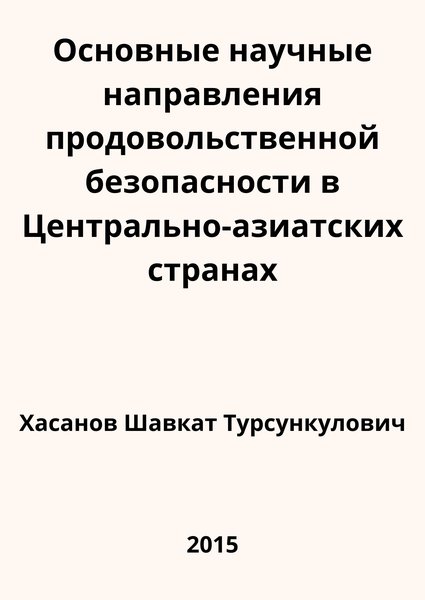
Year: 2015
Collections: Short Communications
Topics: Agriculture
Authors: Хасанов Шавкат Турсункулович
Countries: Kazakhstan, Kyrgyzstan, Uzbekistan, Tajikistan, Turkmenistan
For questions about cooperation, please contact us at: